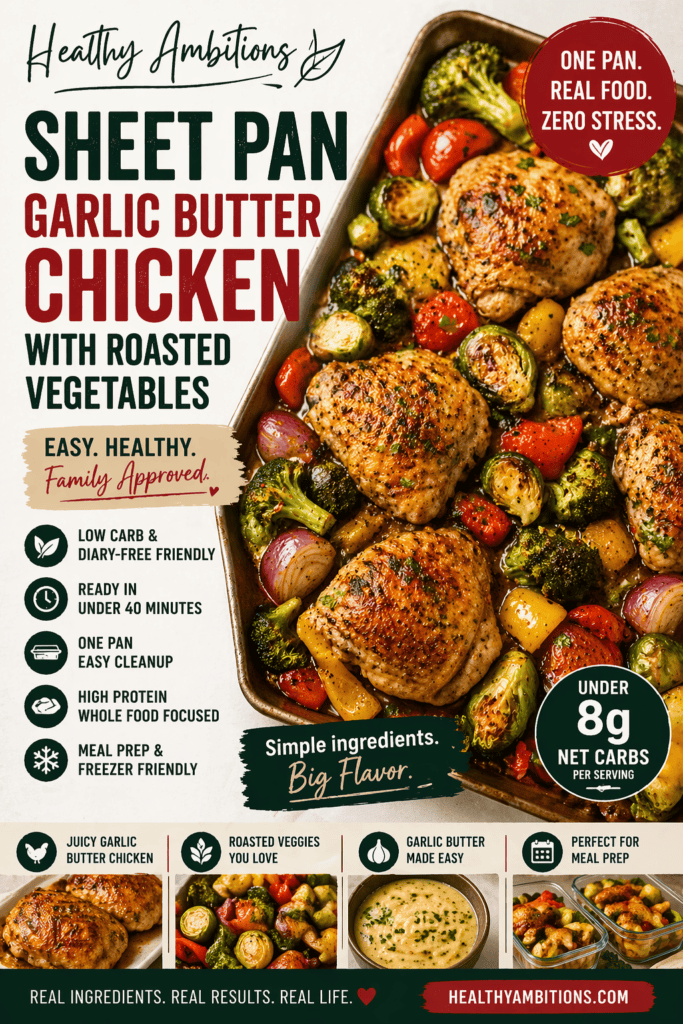
There’s something deeply satisfying about a dinner that comes together on one pan. No juggling multiple pots, no timing anxiety, just real food that actually tastes good. This sheet pan garlic butter chicken with roasted vegetables has become my go-to when life gets chaotic and I need something that feels like a proper meal without the fuss.
I started making this recipe when I realized my family needed easy and healthy meal plans that didn’t require me to be a short-order cook every night. The beauty here is simplicity: chicken thighs (or breasts if you prefer), whatever vegetables are in your fridge, and a quick garlic butter sauce that makes everything taste restaurant-worthy. The dairy-free swap works beautifully, and honestly, most nights I don’t even notice the difference.
This is the kind of recipe that builds confidence in the kitchen. If you can arrange food on a pan and turn on your oven, you’ve got this.
This post may contain affiliate links, which helps keep this content free. Please read our disclosure for more info.
Why You’ll Love This Recipe
- One pan, minimal cleanup – Everything cooks together, so you’re not washing dishes for an hour after dinner
- Naturally low-carb – Built around protein and non-starchy vegetables, no weird substitutions needed
- Dairy-free friendly – Works perfectly with ghee or quality olive oil
- Family-approved – Even picky eaters tend to like roasted chicken and veggies when they’re properly seasoned
- Batch-cook ready – Doubles or triples easily for meal prep throughout the week
- Flexible ingredients – Use what you have; this recipe adapts to your fridge situation
Ingredients
For the Chicken:
- 6 bone-in, skin-on chicken thighs (about 2.5 lbs), or boneless skinless if preferred
- 2 tablespoons avocado oil or melted ghee
- 1 teaspoon garlic powder
- 1 teaspoon paprika
- 1/2 teaspoon onion powder
- 3/4 teaspoon sea salt
- 1/4 teaspoon black pepper
For the Vegetables:
- 1 lb Brussels sprouts, halved
- 1 medium red bell pepper, cut into 1-inch pieces
- 1 medium yellow bell pepper, cut into 1-inch pieces
- 1 small red onion, cut into wedges
- 2 cups broccoli florets
- 2 tablespoons avocado oil
For the Garlic Butter (Dairy-Free Option):
- 4 tablespoons butter (or ghee/refined coconut oil for dairy-free)
- 4 cloves garlic, minced
- 1 tablespoon fresh parsley, chopped
- 1/2 teaspoon lemon zest
- Pinch of red pepper flakes (optional)
Instructions
Step 1: Prep Your Oven and Pan
Preheat your oven to 425°F. Line a large rimmed baking sheet with parchment paper or a silicone mat. This isn’t just about cleanup (though that’s nice); it helps prevent sticking and makes everything golden and beautiful.
Step 2: Season the Chicken
Pat the chicken thighs completely dry with paper towels. This step matters more than you’d think because dry skin gets crispy, wet skin gets soggy. In a small bowl, mix garlic powder, paprika, onion powder, salt, and pepper. Rub the chicken pieces with avocado oil, then coat evenly with the spice mixture on both sides.
Step 3: Arrange Vegetables
Toss all your vegetables in a large bowl with 2 tablespoons of avocado oil and a generous pinch of salt. Spread them across your prepared baking sheet in a single layer. Make sure they have room to breathe because crowded vegetables steam instead of roast.
Step 4: Add the Chicken
Nestle the seasoned chicken thighs among the vegetables, skin side up. The chicken will release juices as it cooks, which flavors everything beautifully. If you’re using boneless chicken breasts, you’ll add them about 10 minutes into the vegetable roasting time since they cook faster.
Step 5: Roast
Place the pan in your preheated oven and roast for 35-40 minutes. The chicken should reach an internal temperature of 165°F, and the skin should be golden and crispy. The vegetables will be tender and caramelized at the edges.
Step 6: Make the Garlic Butter
While everything roasts, melt butter (or your dairy-free alternative) in a small saucepan over medium-low heat. Add minced garlic and cook for about 1 minute until fragrant but not browned. Remove from heat and stir in parsley, lemon zest, and red pepper flakes if using.
Step 7: Finish and Serve
Remove the pan from the oven and drizzle the garlic butter over everything. Let it rest for 5 minutes before serving. This resting time lets the juices redistribute and makes the chicken even more tender.
Substitutions & Allergy-Friendly Options
Making this recipe work for your household is easier than you might think. Here’s how to navigate common dietary needs without losing flavor or simplicity.
Dairy-Free: Replace butter with ghee (which is naturally lactose-free and usually tolerated well), refined coconut oil, or a quality vegan butter. I actually prefer ghee in this recipe because it has a higher smoke point and a rich, nutty flavor that complements the roasted vegetables beautifully.
Egg-Free: This recipe is naturally egg-free, making it perfect for households managing multiple allergies.
Nut-Free: No nuts involved here, so you’re good to go. Just double-check any pre-made spice blends if you use them instead of individual spices.
Soy-Free: Naturally soy-free as written. Watch for hidden soy in some vegan butter brands if that’s your dairy-free swap.
Chicken Alternatives: Swap for bone-in pork chops (same cooking time) or firm fish fillets like salmon or cod (reduce time to 20-25 minutes). For a vegetarian version, use extra-firm tofu pressed and cut into thick slabs.
Vegetable Variations: Use what you have. Green beans, cauliflower, zucchini, asparagus, or mushrooms all work beautifully. Root vegetables like carrots or radishes are great too, just cut them smaller so they cook through.
Macros / Carb Awareness
This sheet pan dinner naturally fits into easy and healthy meal plans focused on lower-carb eating. Each serving (1 chicken thigh with about 1.5 cups of vegetables) contains approximately:
| Nutrient | Per Serving |
|---|---|
| Calories | 420 |
| Protein | 32g |
| Fat | 28g |
| Total Carbs | 12g |
| Fiber | 4g |
| Net Carbs | 8g |
The beauty of this meal is that the bulk of carbohydrates come from fiber-rich vegetables, not starchy fillers. If you’re following a strict ketogenic approach, you can easily reduce the Brussels sprouts and add more low-carb options like cauliflower or asparagus. For those who appreciate structured planning, resources like Mayo Clinic’s simple meal plan approach emphasizes similar principles of balanced plates built around protein and vegetables.
For Kids: The macro breakdown stays the same, but portions adjust based on age and activity level. Most kids do well with half a chicken thigh and a cup of veggies.
Meal Prep, Storage & Freezer Tips
This recipe was practically designed for meal prep. Here’s how to make it work for your week:
Batch Cooking: Double the recipe using two sheet pans. Everything cooks at the same temperature, so you can rotate pans halfway through or use two oven racks.
Storage: Let everything cool completely, then divide into meal prep containers. Store in the refrigerator for up to 4 days. I like using glass containers because they reheat evenly and don’t hold odors.
Reheating: Microwave individual portions for 2-3 minutes, or reheat in a 350°F oven for 10-12 minutes if you want to crisp up the chicken skin again. The oven method is definitely worth it when you have time.
Freezing: This freezes surprisingly well. Cool completely, then freeze chicken and vegetables in separate freezer-safe containers for up to 3 months. The texture holds up better if you slightly undercook the vegetables initially. Thaw overnight in the refrigerator before reheating.
Prep-Ahead Option: Cut all vegetables and mix your spice blend up to 2 days ahead. Store vegetables in the fridge in an airtight container and keep the spice mix in a small jar. When you’re ready to cook, assembly takes about 5 minutes.
Leftover Magic: Shred leftover chicken and toss with the vegetables for a quick breakfast hash. Add a fried egg on top (or skip it for egg-free households). You can also chop everything and wrap it in lettuce leaves for easy low-carb wraps.
If you’re building a system of reliable recipes, check out the free 7-day traditional keto meal plan for more ideas that fit this same practical approach.
Variations
Air Fryer Method
Preheat your air fryer to 380°F. Cook vegetables first for 12-15 minutes, shaking halfway through. Remove vegetables and keep warm. Cook chicken thighs for 18-22 minutes, flipping once, until the internal temperature reaches 165°F. Toss everything with garlic butter and serve. This method works great for smaller portions but requires cooking in batches.
Slow Cooker Adaptation
This isn’t traditionally a slow cooker recipe, but you can adapt it. Place vegetables in the bottom of your slow cooker, season chicken and place on top. Cover and cook on low for 6-7 hours or high for 3-4 hours. The chicken will be tender but won’t have crispy skin. For the last 10 minutes, you can transfer chicken pieces to a hot skillet to crisp the skin, or just embrace the tenderness.
Oven Temperature Adjustments
Lower temp (375°F): Cook for 45-50 minutes. This gentler approach works well if you’re multitasking and want more forgiveness in timing.
Higher temp (450°F): Reduce time to 28-32 minutes. Watch closely because vegetables can burn at this temperature. Best for when you’re short on time and can monitor closely.
Flavor Variations
Italian Style: Add dried oregano, basil, and a sprinkle of parmesan (or nutritional yeast for dairy-free) in the last 5 minutes of cooking.
Spicy Version: Increase red pepper flakes and add a teaspoon of chili powder to the chicken seasoning.
Lemon Herb: Double the lemon zest and add fresh thyme or rosemary to the garlic butter.
Asian-Inspired: Replace garlic butter with a mixture of coconut aminos, sesame oil, ginger, and a touch of rice vinegar. Use bok choy and snap peas instead of Brussels sprouts.
For more versatile low-carb cooking ideas, the keto cheese taco shells recipe shows another approach to simple, adaptable meals.
FAQ
Can I use chicken breasts instead of thighs?
Absolutely. Boneless, skinless chicken breasts work well but cook faster. Add them to the pan about 10 minutes after the vegetables start roasting, and check for doneness at the 25-minute mark. Breasts can dry out more easily than thighs, so watch the temperature carefully and remove them as soon as they hit 165°F.
How do I know when the chicken is done?
The most reliable method is using an instant-read thermometer. Insert it into the thickest part of the thigh (not touching bone) and look for 165°F. Visually, the juices should run clear when pierced, and the meat should no longer be pink near the bone. The skin will be golden brown and crispy.
Will my kids eat this?
Most kids respond well to roasted chicken and vegetables, especially when everything’s seasoned properly. If your kids are hesitant about mixed vegetables, try roasting their favorite veggie separately on the same pan. Bell peppers and broccoli tend to be gateway vegetables for picky eaters. You can also serve the garlic butter on the side so kids can control how much they want.
What’s the difference between this and other easy and healthy meal plans?
This recipe focuses on whole foods and low-carb eating without requiring specialty ingredients or complicated techniques. Unlike many meal plans that rely on processed low-carb products, this uses real vegetables and properly seasoned meat. It’s designed to fit into sustainable eating patterns, not short-term diets. Resources like Healthy Avid’s meal plan guide offer similar whole-food approaches across different dietary styles.
Can I make this without the garlic butter?
Yes, though the garlic butter really does elevate everything. You can simply drizzle with olive oil and a squeeze of fresh lemon juice instead. Or make a quick pan sauce by deglazing a skillet with a bit of chicken broth and lemon juice after roasting.
How do I prevent vegetables from getting soggy?
Three keys: don’t overcrowd the pan (use two pans if needed), make sure vegetables are dry before tossing with oil, and cut pieces uniformly so they cook evenly. If your oven runs cool, increase the temperature by 25°F.
Final Tips & Gentle Encouragement
The first time you make this, focus on getting it done rather than getting it perfect. Your vegetables might not be cut in identical sizes, and that’s completely fine. They’ll still taste great. What matters is that you’re building a foundation of reliable recipes that work for your real life.
My practical tips after making this dozens of times:
- Invest in a good meat thermometer. It removes all the guesswork and prevents overcooking.
- Line your pan. Future you will thank present you during cleanup.
- Don’t skip patting the chicken dry. Crispy skin is worth those extra 30 seconds.
- Taste your vegetables when they come out. If they need more salt, add it. Seasoning adjustments are part of cooking, not failure.
- Make this on a Sunday, and you’ve solved at least three weeknight dinners.
Remember: Easy and healthy meal plans aren’t about culinary perfection. They’re about creating systems that actually work when you’re tired, when the kids are cranky, when work was overwhelming. This recipe is that kind of reliable.
If something goes wrong the first time, or if your family doesn’t love every vegetable you try, adjust and try again. Cooking is a skill that builds with repetition, not a test you pass or fail.
For more beginner-friendly guidance on building sustainable meal rhythms, Skinnytaste’s flexible meal plans offer another approach to creating weekly structure without rigidity. And if you’re ready to stock your pantry with reliable staples, the allergy-friendly keto pantry list helps you set up for success.
You’re not aiming for Instagram-worthy perfection here. You’re aiming for a warm dinner that brings your family together, uses ingredients you can pronounce, and doesn’t leave you exhausted. That’s not just possible; it’s absolutely within your reach. Keep going, adjust as you learn, and trust that every meal you make builds your confidence for the next one.
Building easy and healthy meal plans that actually stick starts with recipes like this one: simple, flexible, and designed for real kitchens where life happens. Whether you’re just starting to explore low-carb eating or you’ve been at it for years, having a collection of reliable recipes makes all the difference. You’ll find more practical, family-friendly low-carb recipes and helpful resources at Healthy Ambitions, where every recipe is tested in a real kitchen by someone who genuinely understands the challenge of feeding a family well without losing your mind. Progress over perfection, always.