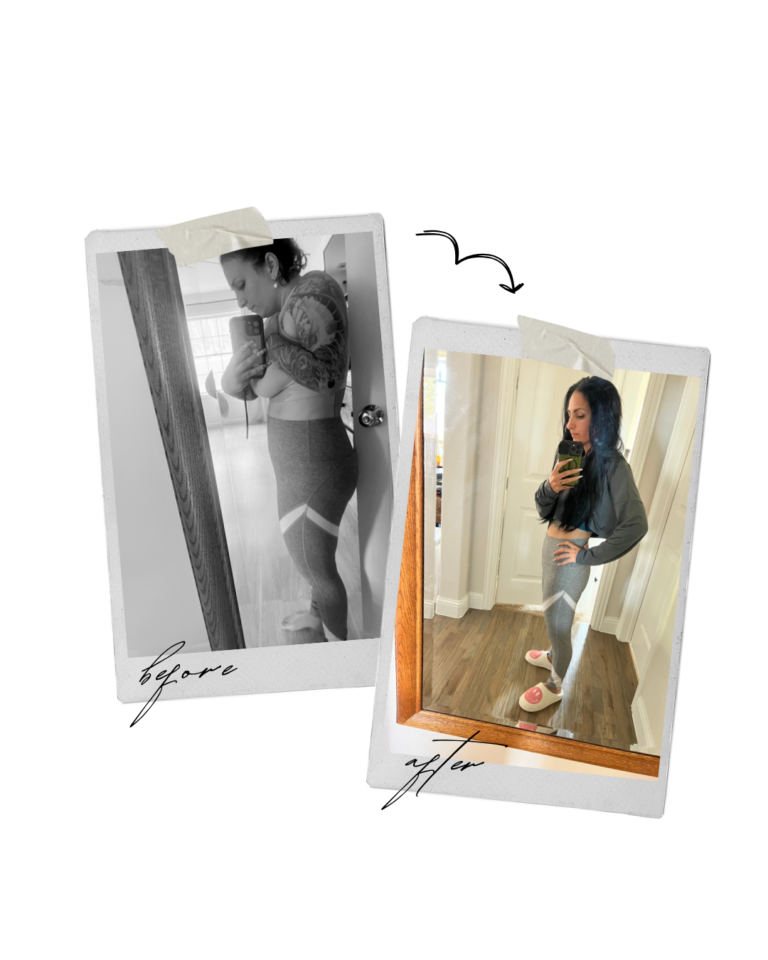
One Year of Weight Maintenance: What Actually Worked (and What Didn’t) Meta Description: I’ve kept 70 pounds off for a full year — here’s my real, unfiltered take on weight loss maintenance: what worked, what I got completely wrong, and what finally changed everything.
I’ve maintained my weight for a full year.
That sentence used to feel impossible to say out loud.
For most of my adult life, I could white-knuckle my way through weight loss — hold steady for maybe a year if I was lucky — and then life would hit. Stress. Chaos. Hormones. And I’d be right back at square one, standing in front of my closet thinking, I just need to lose 10 pounds again.
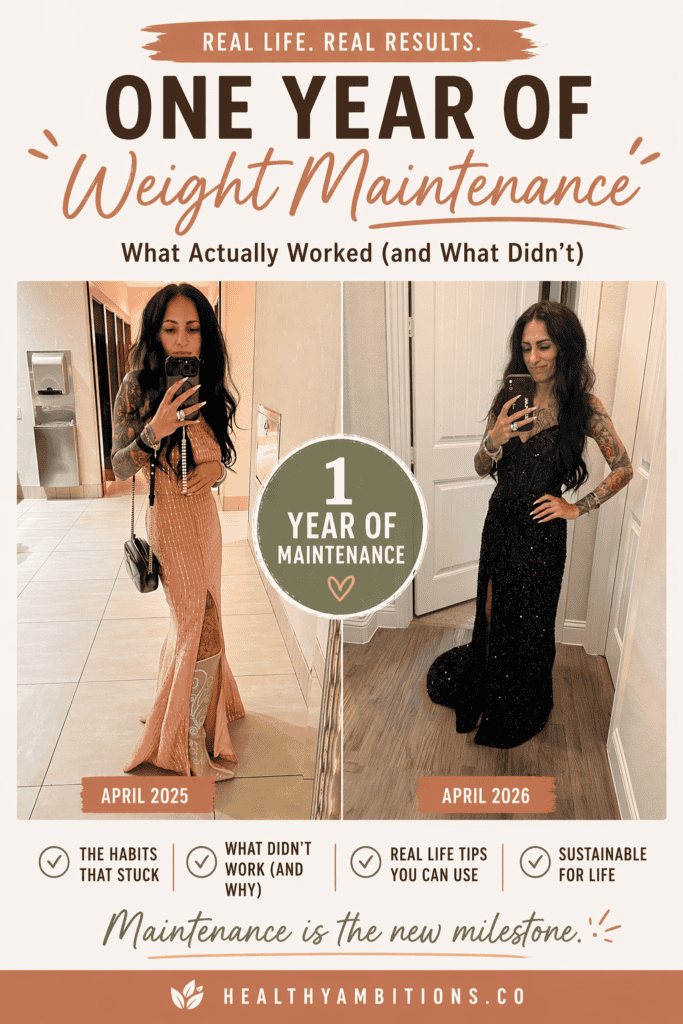
This time is different.
Not because I tried harder. Not because I found more willpower. But because I finally got honest about what actually works for my body — not the body the internet tells me I should have.
After losing 70 pounds and keeping it off for a full year, here are my real, unfiltered weight loss maintenance tips. No fluff. No selling you on a product. Just what’s actually true.
This post may contain affiliate links, which helps keep this content free. Please read our disclosure for more info.
1. Movement Matters — But Not the Way You Think
Everyone loves to say “just move more.”
I was moving more. A lot more.
At my heaviest, I was biking 20+ miles a day on my Peloton. Every single day. I was exhausted, chronically inflamed, and my body was holding onto weight like its life depended on it.
When I finally swapped intense cardio for low-impact walking, everything changed. Weight started dropping. My body looked less inflamed. My hunger stabilized.
Now? I walk on a treadmill during work and I got rid of my desk chair completely. I stand all day.
The hot take nobody wants to hear: if your workouts are stressing your body out, they are not helping your weight. High-intensity exercise raises cortisol. Cortisol tells your body to hold fat. For some of us — especially women over 35 dealing with hormonal shifts — this isn’t a theory. It’s what’s happening in your body.
Low-impact movement consistently beats intense cardio for long-term weight loss maintenance. I lived it.
2. What You Eat Matters More Than How Much You Move
I know people don’t want to hear this.
But you cannot out-exercise a diet that doesn’t work for your body. That’s just biology.
During maintenance, I’ve experimented with adding more carbs back in — and it’s been fine for me. But there’s real nuance here that nobody talks about. Not all carbs hit the same. Not all sugar is equal. And your gut — not Instagram — decides what “works” for you.
This is something I had to figure out the hard way. The foods I thought were healthy were quietly keeping me inflamed. Once I cleaned that up, everything got easier.
3. Gut Health Is Non-Negotiable
This is honestly where everything changed for me.
Once I identified my food allergies, cleaned up what I was eating, and started actually supporting my gut — I lost weight without forcing it. And more importantly, I was able to keep it off.
I lost 20 pounds just from removing the foods my body was reacting to. Not from eating less. Not from exercising more. From eating differently.
If your gut is inflamed, your body will fight you at every single turn. Bloating, cravings, holding onto weight, brain fog — a lot of what gets chalked up to “I just have a slow metabolism” is actually a gut issue.
[→ Related: Foods That Cause Inflammation (And What I Eat Instead)]
4. Stop Drinking Your Calories
This one is simple, but it matters more than people give it credit for.
No sugary drinks. No “healthy” high-calorie beverages. No mindless sipping on things that feel innocent but add up fast.
Water wins. Every time.
This was a non-negotiable during weight loss and it stayed a non-negotiable during maintenance. The second I start letting this slide, I feel it.
5. Protein Matters — But the Source Matters More
Here’s something that surprised me.
I cut out protein bars and protein shakes. Both. And I saw a noticeable difference in my hunger levels, my bloating, and my overall inflammation.
I was buying into the “high-protein” marketing without paying attention to what was actually in those products. The fillers, the artificial sweeteners, the processed ingredients — all of it was quietly working against me.
Whole food protein — actual meat, eggs (for those who tolerate them), real food — beats processed “high-protein” products every time. If you’re relying on bars and shakes to hit your protein goals, it might be worth looking at what else is in them.
[→ Related: High-Protein Meals That Are Actually Whole Foods]
6. If You’re Over 35, Get Your Hormones Checked
This does not get talked about enough, and it should.
I started working with my doctor and was prescribed an estrogen blocker. I genuinely wish I had done it sooner. Before that, I was doing everything “right” — eating clean, staying active, managing stress — and still hitting walls.
Hormones can stall weight loss completely. They increase cravings. They cause inflammation. They make your body work against you even when you’re doing all the right things.
If you’re in your late 30s or 40s and feeling like you’re fighting your own body no matter what you do, please get your labs done. A simple blood panel can change everything.
7. Your Body Doesn’t Burn Fat While You’re Drinking Alcohol
Blunt. But true.
When you drink, your body prioritizes metabolizing the alcohol first. Fat burning pauses. Cravings go up. Decision-making gets worse.
I’m not saying never drink. I’m saying this is why that glass of wine during a “good eating week” can still stall your progress. It’s not about the calories. It’s about what alcohol does to your metabolism in the hours after you consume it.
Worth knowing. Worth factoring in.
8. Maintenance Is Not a Free-For-All
This was the biggest mindset shift I had to make.
Maintenance for me means approximately 500 more calories than what I was eating to lose weight. That’s it. And honestly? 500 calories is not a lot once you actually look at it.
If you don’t understand your portions — really understand them — maintenance turns into weight gain really fast. Not because you’re doing anything dramatically wrong, but because small, daily drift adds up.
I still track. I still pay attention. Maintenance is not the finish line where you stop caring. It’s a different phase that still requires intention.
9. “Balance” Looks Different for Every Body
The internet loves to show huge cheat meals, “I eat whatever I want” energy, and the idea that sustainable means effortless.
That is not my reality.
For me, balance is structured. Balance is intentional. Balance is not binge → restrict → feel guilty → repeat. I had to dismantle that cycle completely before I could maintain anything.
If balance feels hard for you, that’s not a character flaw. That’s the actual work. And it’s worth doing.
[→ Related: Breaking the Binge-Restrict Cycle for Good]
A Few More Hot Takes (Because They Actually Matter)
- Consistency beats intensity every single time
- Sleep impacts your weight more than most diets do
- Chronic stress will stall your progress faster than carbs ever will
- If your plan isn’t sustainable, it’s not a plan — it’s just another phase
These aren’t small things. They’re the things that determine whether your weight loss sticks or whether you’re back at the starting line in 18 months.
What One Year of Maintenance Actually Taught Me
I’m not perfect at this. I’m not trying to be.
What I’ve finally figured out after a year is that maintenance isn’t about white-knuckling your way through every temptation. It’s about understanding your body well enough that you’re not constantly fighting it.
That means knowing your food triggers. Understanding your hormones. Moving in ways that support your body instead of stress it out. And giving yourself a realistic picture of what “balance” actually looks like — not the curated version you see online.
This is the first time in my adult life that I feel like I’m not waiting for the other shoe to drop. Not bracing for the moment things fall apart.
That feeling? It’s worth more than the number on the scale.